
What Is Generative AI and Why Does It Matter?
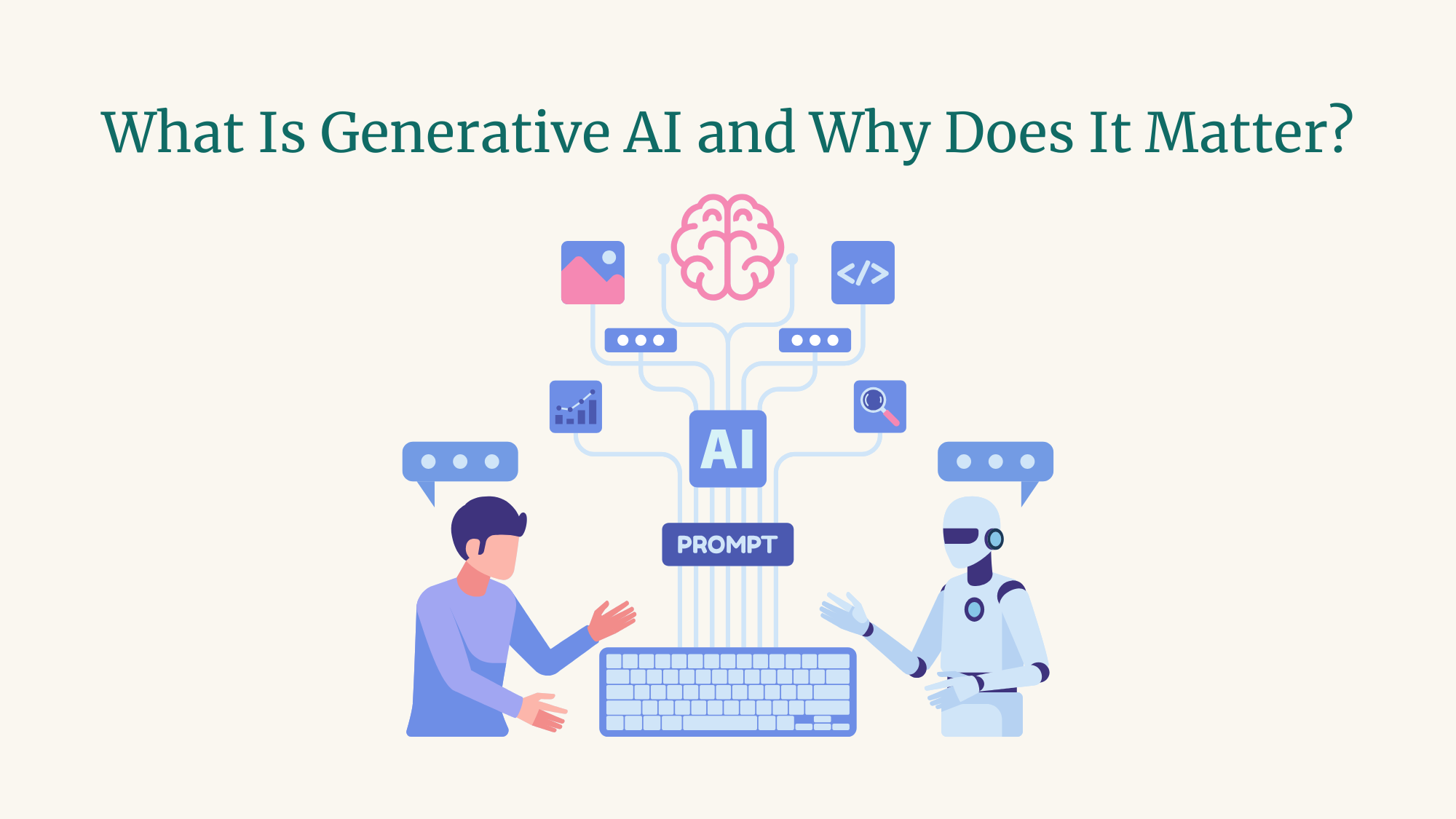
Artificial Intelligence (AI) seems to be everywhere these days. News stories discuss it, businesses are adopting it, and people are using AI-powered tools to write emails, create images, answer questions, and learn new skills. Yet despite all the attention, many people still aren't quite sure what generative AI is or why it matters.
If you've ever felt confused by the terminology or wondered whether AI is something you need to understand, you're not alone. The good news is that you don't need a technical background to learn the basics. In fact, understanding AI is quickly becoming part of what it means to be digitally literate in today's world.
What Exactly Is Generative AI?
Generative AI is a type of artificial intelligence that can create new content based on patterns it has learned from large amounts of existing information.
Depending on the tool, generative AI can generate written content, images, videos, music, computer code, and more. Unlike traditional software that simply follows a set of programmed instructions, generative AI can respond to questions, generate ideas, and create original outputs based on prompts from a user.
For example, you might ask an AI tool to draft a professional email, explain a difficult concept in plain language, suggest meal ideas, or help brainstorm a project. The AI generates a response based on patterns it has learned from its training data.
While the technology can seem impressive, it's important to remember that AI is not thinking or understanding information the way humans do. Instead, it predicts what information is most likely to be useful or relevant based on the prompt it receives.
Why Is Everyone Talking About AI Right Now?
Artificial intelligence has existed for decades, but recent advances have made these tools more accessible than ever before. Today, many AI-powered applications are available to the public, often at little or no cost.
As a result, AI is becoming part of everyday life in ways that many people may not even realize. Search engines now provide AI-generated summaries. Email programs suggest responses before you finish typing. Customer service chatbots answer questions online. Smartphones use AI to improve photos, predict text, and power voice assistants.
Businesses, schools, healthcare organizations, and government agencies are also exploring ways to use AI to improve efficiency and provide services. Because the technology is spreading so quickly, many people are asking an important question: How can I understand and use these tools effectively?
How AI Is Already Showing Up in Everyday Life
You may already be interacting with AI more often than you think.
When you use a search engine, shop online, stream a movie, or scroll through social media, AI is often working behind the scenes. It helps recommend content, organize information, and personalize digital experiences.
Generative AI takes things a step further by creating new content instead of simply organizing existing information. For example, someone planning a vacation might use AI to create an itinerary. A job seeker might use it to tailor their resume to a specific job posting. A student might ask it to explain a challenging concept in a different way.
Many people find these tools helpful because they can save time, spark creativity, and make information more accessible. However, like any technology, they work best when users understand both their strengths and their limitations.
The Benefits—and Limitations—of Generative AI
One reason generative AI has gained so much attention is that it can help people accomplish tasks more efficiently. It can assist with writing, summarize large amounts of information, generate ideas, and provide explanations tailored to different learning styles.
For learners, this can make new topics feel more approachable. For professionals, it can reduce time spent on repetitive tasks and create more opportunities to focus on meaningful work.
At the same time, AI is not perfect. Generative AI does not have conscious understanding of the topics it handles in the same way that a human does. As a result, it can sometimes provide inaccurate information, make incorrect assumptions, or present outdated facts as if they are current – not maliciously, but just because its skill is in filling in patterns rather than actually evaluating information. This is why it's important to check AI output using trusted sources, especially when making important decisions.
Privacy is another important consideration. Users should avoid sharing sensitive personal information with AI tools unless they understand how that information may be stored or used.
Understanding these limitations helps people use AI more responsibly and confidently.
Why AI Literacy Matters
Just as digital literacy helps people navigate computers, smartphones, and the internet, AI literacy helps people understand how artificial intelligence works and how to use it effectively.
AI literacy is not about becoming a programmer or technology expert. Instead, it's about developing the skills needed to evaluate AI-generated information, ask thoughtful questions, recognize potential risks, and use these tools responsibly.
As AI becomes more common in workplaces, schools, and everyday life, people who understand the basics will be better prepared to adapt to new technologies and make informed decisions about how they use them.
Learning about AI can also help people to manage worries about how this technology might affect them. When people understand how a technology works, it often feels less intimidating and easier to evaluate critically.
Getting Started with AI
If you're curious about AI, the best place to start is with exploration and learning. Try asking an AI tool simple questions, experiment with different prompts, and pay attention to the strengths and weaknesses of the responses you receive. You don’t have to embrace it – start by getting curious and gathering information so you can make your own decisions about whether and how to use it.
Like many digital skills, learning about AI is a process. You don't need to know everything at once. Small steps can build understanding over time and help you feel more comfortable using new technology as it continues to evolve.
Ready to Learn More?
Artificial intelligence is changing how we learn, work, and communicate. Understanding the basics can help you make informed decisions and use these tools more effectively in your daily life.
At Wright to Learn, our beginner-friendly AI workshops are designed to help adults explore artificial intelligence in a supportive, practical environment. Whether you're completely new to AI or simply want to better understand what all the buzz is about, we're here to help.
Start building your AI literacy today!
